Every business, whether small or large, depends on its employees. Managing employee records properly is essential for smooth operations, legal compliance, and professional growth. Unfortunately, many companies still use outdated systems, scattered files, or incomplete records. This creates confusion, delays, and unnecessary risk.
Employee data management means organizing, storing, updating, and securing important employee information in a structured way. This may include joining forms, ID proofs, addresses, contracts, attendance, salary records, leave details, performance reports, and verification status.
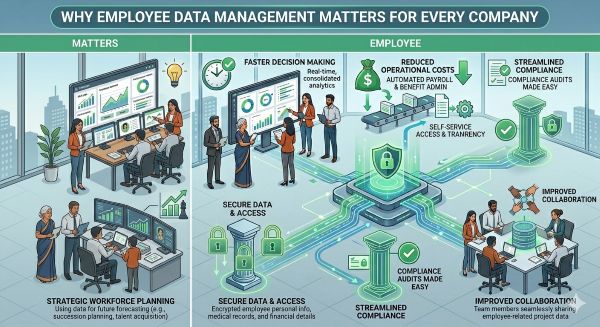
One major benefit of proper employee data management is efficiency. When records are organized, HR teams and management can quickly access required information without wasting time searching through files or emails.
Accuracy is another important factor. Missing or outdated employee data can create payroll errors, communication issues, compliance gaps, and reporting problems. Regular updates help businesses maintain reliable records.
Security is equally critical. Employee records contain sensitive information such as identity details, bank information, addresses, and contracts. Poor data handling can lead to privacy breaches or misuse. Secure management systems help protect confidential information.
Employee data management also supports better hiring and onboarding. New employee details can be collected, verified, and stored professionally from day one. This creates a stronger HR process and better employee experience.
During audits or compliance checks, organized records save time and demonstrate professionalism. Businesses can quickly produce required documents and reports when needed.
As companies grow, manual recordkeeping becomes harder to manage. Startups that begin with simple spreadsheets often struggle once teams expand. A structured system becomes necessary for long-term growth.
MHN News helps businesses manage employee data through organized and secure solutions. We assist with record setup, document organization, verification tracking, and ongoing data management support.
Good employee data management is not just administration—it is a strategic business advantage. Organized companies respond faster, make better decisions, and reduce operational stress.
Whether you have five employees or five hundred, maintaining accurate and secure records is essential. Businesses that invest in strong employee data systems build a stronger future for their teams and operations.
